
Hi, I’m Nige. I’ve been at this a while.
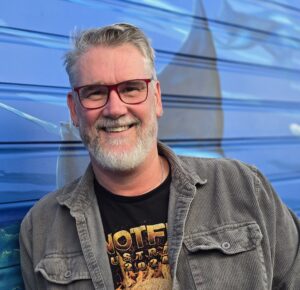
Who I am
I’ve worked with computers and electronics for 45 years.
Starting out professionally in electronics trades and working my way through a career in high-tech and manufacturing, I’ve ended up building technology solutions in most of the jobs I’ve had, whether or not it was in the job description.
For many years I also published Django textbooks on the side and ran the Djangobook website for several years.
I think of myself as an author and educator more than an engineer. I learn enough about a technology to explain it properly, then I write it down.
I also write fiction and love music and art, which means I’ve got a Tech Brain and a Creative Brain, and they don’t always agree. Tech Brain is fascinated by what these machines can do. Creative Brain wants to know if they’re rocketing us towards the apocalypse.
Both sides agree that it is both an exciting and terrifying time to be alive.
The creative line in the sand
I used to be one of the writers who wanted nothing to do with AI. I’d seen the slop, and I understood the threat to creatives everywhere.
What got me past it was a simple rule: AI doesn’t make the page.
Once I drew that line, I could see everything on the other side of it: plotting, outlining, brainstorming, world-building, research, editing. Since then my creative output has skyrocketed, and not a single AI-written sentence has made it into my creative work.
A golden opportunity for indies
I’ve spent most of my career in small to medium, independent businesses. I know what it’s like to make the best of limited resources and the need to constantly compromise between dreams and practical realities.
I still work full-time. I also coach other authors, write fiction and non-fiction, and publish articles online. Somewhere in there I still have a life I enjoy. I could not achieve half of this without the AI toolkit I have built to support that level of output. It will continue to help me innovate and grow my writing business.
AI also puts a set of tools in the hands of indies that will vastly increase our capacity to innovate and grow in ways that were impossible before.
But there’s a catch. Small operators don’t have the luxury or the capacity to absorb mistakes. One privacy breach. One leak of critical IP and everything we’ve built can be gone in a day.
We need an operating environment where we can experiment with solutions without the risk of privacy or security breaches, and to avoid accidentally chalking up massive token bills.
That’s where local AI comes in.
What the tagline means
Local AI: Runs on hardware you own or a server you control. For most indies, a well-configured local model is more than enough, once you’ve adjusted how you work with it.
Sovereign AI: Not controlled by nation states, or by companies that behave like them. Your data, your rules.
Your AI: Tools customised for you, that sharpen your thinking, not replace it.
What I believe
The invention of writing let us externalise memory. AI lets us externalise cognition. That’s a genuine paradigm shift. AI allows us to offload much of the cognitive load of researching, summarising and the testing of ideas, extending what a human mind can achieve.
The chess world has already worked this out. Machines beat the best humans years ago, and chess survived. Serious players now use the engines to improve their game. That’s the future I’d like for writers, and for everyone else who works with their head.
Unfortunately, the vast majority of what is problematic with AI generation today is closer to delegated or outsourced cognition. Once we shift human reasoning, judgment, and emotional truth to the machine, the creative function collapses.
Augment, don’t outsource. The point is thinking better, not thinking less. AI won’t replace people, but people who use it well will replace those who don’t, and businesses that swap people for AI will eventually lose to the ones that use AI to make their people better.